Aunt Jennifer's Tigers By Adrienne Rich
November 06, 2026
I first read "Aunt Jennifer's Tigers" by Adrienne Rich when I was in Class 12, and the line that stayed with me the most was about the massive weight of the wedding band. It is such a simple image, but when you think about it for a moment, there is so much meaning hidden behind it. A wedding ring is not physically heavy enough to make someone's hand tremble, but the marriage it represents can certainly carry an enormous emotional weight. That central metaphor is what makes this poem so haunting to me.
What I especially love about this poem is how short it is. It is only three stanzas, and it barely takes a few minutes to read. Yet, the more you read it, the more meanings you begin to notice. The contrast between Aunt Jennifer and the tigers she creates is particularly beautiful. The tigers are fearless, confident, majestic, and free. They move around with an independence that Aunt Jennifer herself seems unable to experience in her own life.
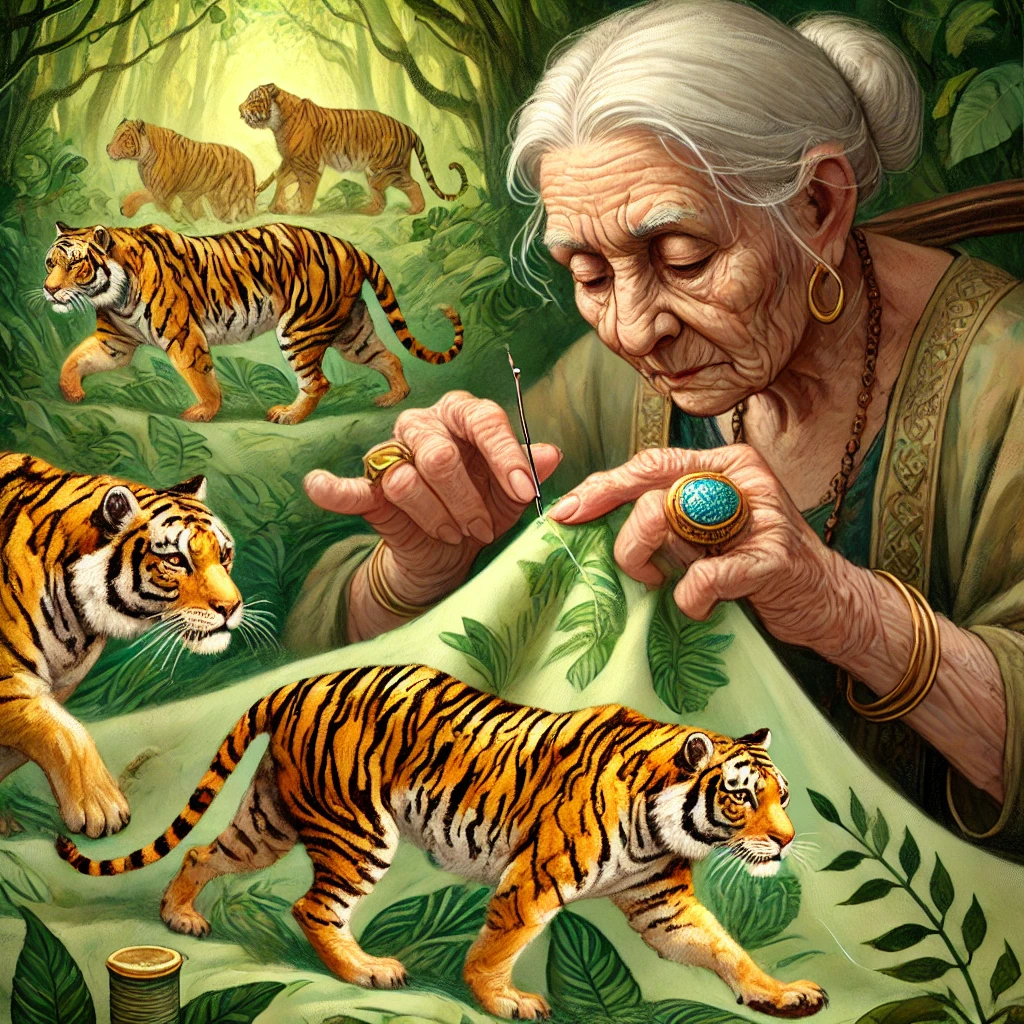
Aunt Jennifer's Tigers (Source)
I think the most interesting part is that Aunt Jennifer is the one creating these tigers. They are not simply beautiful animals in an embroidery. They represent a spirit of freedom, fearlessness, and confidence that she may have always carried within herself but never had the opportunity to express fully. The tigers can move freely through their world, while Aunt Jennifer remains burdened by the expectations and restrictions of her marriage.
The poem also leaves room for several interpretations. Aunt Jennifer's suffering could suggest domestic oppression, psychological trauma, unequal power within marriage, or the larger restrictions placed on women by society. What makes it even more powerful is that the poem does not need to explain everything directly. Through a few images, Adrienne Rich manages to communicate an entire lifetime of fear, restraint, and unfulfilled freedom.
About the Poet
Adrienne Rich was an American poet, essayist, and feminist thinker born on 16th May 1929. Her poetry often explores themes of identity, gender, power, social expectations, and women's experiences. She became one of the most influential literary voices of the twentieth century, particularly for her writings on feminism and social inequality. "Aunt Jennifer's Tigers" is a wonderful example of how she uses ordinary images and powerful symbols to question the restrictions placed on women. Rich died on 27th March 2012, but her poetry continues to inspire readers to think about freedom, individuality, and equality.
The Fearless Tigers and Aunt Jennifer's World
Aunt Jennifer’s tigers prance across a screen,
Bright topaz denizens of a world of green.
They do not fear the men beneath the tree;
They pace in sleek chivalric certainty.
The poem begins by introducing us to Aunt Jennifer's tigers. They are described as bright, confident creatures moving freely across a screen. Their golden colour stands out against the green background, creating a beautiful image of strength and liveliness. They are not afraid of the men around them, and their movements suggest confidence, courage, and independence.
What I find especially beautiful here is the contrast between these tigers and Aunt Jennifer herself. The tigers seem to possess everything that Aunt Jennifer lacks in her everyday life. They are fearless and free, while she appears to be trapped within the expectations of her marriage and society. Their confidence is almost the opposite of her own helplessness.
I also think the choice of tigers is important. They are majestic animals, known for their strength and independence. They do not appear to seek anyone's approval or permission. In a way, they represent the freedom that women like Aunt Jennifer were often denied. The phrase "chivalric certainty" makes them seem almost like noble warriors, moving through their world without fear.
Some words:
Prance: To move around proudly and confidently, often with lively or energetic steps. It suggests the tigers' fearless movements.
Bright topaz: A reference to the bright golden-yellow colour of the tigers, resembling the gemstone topaz.
Denizens: Inhabitants or creatures that live in a particular place. The tigers appear to belong naturally to their world.
Chivalric certainty: A sense of courage, confidence, and fearless assurance. It highlights the tigers' majestic and unafraid nature.
For me, the most interesting thing is that these tigers are not real animals roaming freely in a forest. They exist in Aunt Jennifer's embroidery. She is the one creating them. This makes me wonder whether the freedom we see in the tigers is actually a reflection of the freedom she wishes she could experience herself.
Sometimes, the things we create express the freedom we cannot experience in our own lives.
The Weight of the Wedding Band
Aunt Jennifer’s fingers fluttering through her wool
Find even the ivory needle hard to pull.
The massive weight of Uncle’s wedding band
Sits heavily upon Aunt Jennifer’s hand.
This is the stanza that I find particularly powerful. The poem shifts its attention from the confident tigers to Aunt Jennifer herself. We are shown how difficult it is for her to carry out even the simple act of creating her embroidery. Her fingers tremble as she works with the wool, and even pulling the needle through the fabric seems like a struggle.
The line about the massive weight of the wedding band is probably my favourite metaphor in the entire poem. A wedding ring is a small object. It is not literally heavy enough to make someone's fingers tremble. But metaphorically, it can represent the enormous psychological burden of a marriage that has taken away someone's independence.
I think this is what makes the image so haunting. The wedding band is supposed to represent love, commitment, and togetherness. But here, it becomes a symbol of restriction and oppression. It represents the responsibilities, expectations, and emotional suffering that Aunt Jennifer has carried throughout her married life.
The poem also mentions Uncle's wedding band, which is significant. The marriage is not presented as an equal relationship. Aunt Jennifer seems to be the one carrying its emotional burden, while the reference to the uncle reminds us of the unequal power structure within the relationship.
Some words:
Fingers fluttering: The trembling or unsteady movement of Aunt Jennifer's fingers, suggesting nervousness and fear.
Ivory needle: A reference to the light-coloured needle used for embroidery. It also draws attention to the delicate nature of her creative activity.
Wedding band: A wedding ring. In the poem, it symbolises the emotional and psychological burden of Aunt Jennifer's marriage.
Massive weight: An expression that goes beyond physical heaviness. It represents the overwhelming responsibilities, restrictions, and suffering associated with her married life.
What I find especially interesting is how Adrienne Rich uses such an ordinary object to communicate something so complex. The ring itself is small, but everything it represents is enormous. It is almost as if Aunt Jennifer cannot escape the weight of her marriage, even while she is trying to express herself through something as personal and creative as embroidery.
The wedding band may be physically small, but the emotional weight of an unhappy marriage can last a lifetime.
The Terrified Hands and the Freedom That Survives
When Aunt is dead, her terrified hands will lie
Still ringed with ordeals she was mastered by.
The tigers in the panel that she made
Will go on prancing, proud and unafraid.
The final stanza is perhaps the saddest part of the poem. It tells us that even after Aunt Jennifer's death, her hands will still carry the signs of the fear and suffering she experienced during her life. The image of her terrified hands suggests that the burden of her marriage was not something she could simply escape.
I find this particularly heartbreaking because it suggests that Aunt Jennifer spent so much of her life living with fear that it became a permanent part of her story. Even when she is no longer alive, her hands will tell us something about the life she had to endure. Her body becomes a silent reminder of everything she went through.
But there is an interesting contrast here. While Aunt Jennifer is described through images of fear and helplessness, the tigers she created will continue to move proudly and freely. They will remain fearless even after she is gone. Her own life may have been restricted, but the spirit of freedom represented by her art survives.
This is what makes the ending so meaningful to me. Aunt Jennifer may never have been able to live like the tigers she embroidered, but she was still able to imagine and create a world in which such freedom existed. Her art becomes a reflection of a part of herself that her circumstances could not completely take away.
Some words:
Terrified hands: Hands that reveal extreme fear. They symbolise the lasting effects of the suffering and oppression Aunt Jennifer experienced.
Ringed with ordeals: Surrounded or burdened by difficult and painful experiences. It suggests the hardships she endured throughout her life.
Mastered by: Completely controlled or dominated by something. It suggests that Aunt Jennifer was unable to escape the power and restrictions of her marriage.
Panel: The piece of fabric on which Aunt Jennifer has embroidered the tigers.
Prancing tigers: The confident and fearless creatures created by Aunt Jennifer. They symbolise freedom, strength, and independence.
For me, the most beautiful and painful part of this ending is that Aunt Jennifer is the creator of the very tigers that represent everything she could not freely be. She imagined them as fearless, independent, and majestic. Perhaps some part of her always wanted to live with that same confidence. The poem leaves us with the contrast between a woman whose life was restricted and the fearless creatures whose freedom will continue through her art.
Her life may have been shaped by fear, but the freedom she imagined continues to live through her art.
In my view, "Aunt Jennifer's Tigers" is a beautiful yet deeply unsettling poem about women's freedom, marriage, and the psychological burden of living under unequal expectations. What makes it so powerful is that Adrienne Rich does not need to describe every detail of Aunt Jennifer's suffering. Through the contrast between the tigers and the woman who creates them, she manages to communicate an entire world of restrictions and unfulfilled desires.
The image that stays with me the most is still the wedding band. It is such a simple object, but it carries the weight of an entire relationship and perhaps even an entire lifetime. I also love the fact that Aunt Jennifer is the one who creates the tigers. It suggests that the spirit of freedom and independence exists within her, even if her circumstances never allow her to express it fully.
There are so many ways to interpret this poem. It can be read as a comment on domestic oppression, psychological suffering, gender inequality, or the restrictions imposed on women by society. And that is what makes it such a remarkable poem. It is short, but every time I read it, I find another layer of meaning.
I hope you enjoyed reading my perspective on this beautiful poem. I would greatly appreciate any feedback or thoughts you may have. Feel free to reach out to me via email.
Leave a comment 💬
Choose a message to share your thoughts about this article.
Your email app will open with your comment ready to send.