Doctor Faustus By Christopher Marlowe
November 10, 2026
Doctor Faustus by Christopher Marlowe is one of the most interesting tragedies I have come across. And what makes it particularly fascinating is its central idea: what happens when someone becomes so intelligent, ambitious, and dissatisfied with ordinary knowledge that they begin searching for something beyond the limits of human understanding?
Faustus is not an unintelligent person. Quite the opposite. He is extremely knowledgeable and has already studied traditional academic disciplines such as philosophy, medicine, law, and theology. But he becomes dissatisfied with them. He feels that ordinary knowledge is no longer enough for him.
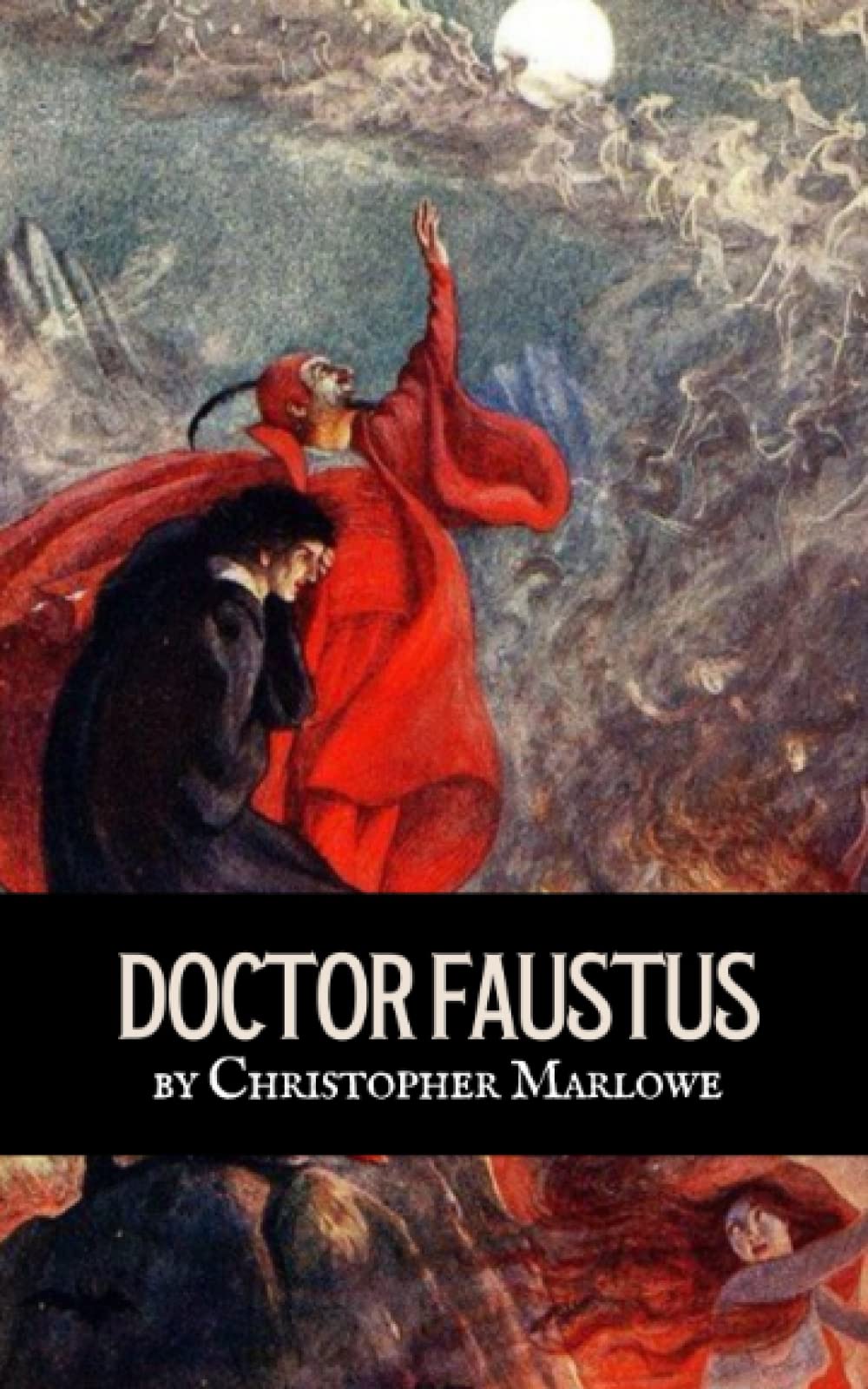
Doctor Faustus by Christopher Marlowe (Source)
And then he discovers something that promises to give him extraordinary power: black magic, or necromancy. Instead of being satisfied with what he has already achieved, he decides to explore the supernatural.
What happens after that is almost like watching someone receive an unlimited credit card for the first time. Imagine getting your salary on the first day of the month, opening a shopping application, and adding absolutely everything to your cart. You keep saying, "I want this, I want that, and I want that too." You do not stop because you believe the credit card has no limit.
That is almost how Faustus behaves after gaining access to supernatural power. He has the opportunity to achieve extraordinary things, but instead of using his power for something meaningful, he spends much of his time showing tricks, entertaining powerful people, and satisfying increasingly unnecessary desires.
And this is where the tragedy becomes particularly interesting. Faustus has enormous intellectual potential, but his ambition gradually turns into pride, greed, vanity, and the desire for unlimited pleasure.
The play also introduces the Seven Deadly Sins, which appear before Faustus and present themselves as personifications of different human weaknesses. They are not simply entertaining characters. They help us understand the kind of desires that increasingly control Faustus.
Eventually, Faustus becomes so attached to the pleasures and power he has gained that he fails to recognise how little time he has left. His fascination with Helen of Troy, his relationship with Mephistophilis, and his final refusal to turn away from his bargain all contribute to his downfall.
For me, the most important question in this play is not simply why Faustus makes a deal with the devil. It is why someone who already possesses so much knowledge becomes so careless with his own future.
Sometimes, the greatest danger is not a lack of knowledge, but the belief that knowledge and intelligence make us powerful enough to escape every consequence.
A Quick Summary: What Is Doctor Faustus About?
Doctor Faustus by Christopher Marlowe is a tragic play about a highly educated scholar named Faustus who becomes dissatisfied with traditional forms of knowledge. Although he has studied subjects such as philosophy, medicine, law, and theology, he believes that these disciplines cannot provide the extraordinary power he desires.
He therefore turns towards necromancy and summons the demon Mephistophilis. Through him, Faustus enters into an agreement with Lucifer, promising to surrender his soul in exchange for twenty-four years of service from Mephistophilis.
During these twenty-four years, Faustus gains access to supernatural powers. However, instead of using them to achieve something truly extraordinary, he often wastes his abilities on tricks, entertainment, and the satisfaction of his personal desires.
The play also introduces the Seven Deadly Sins, which appear before Faustus and represent different forms of human weakness. As time passes, Faustus becomes increasingly attached to pleasure, pride, and the power he believes he possesses.
Towards the end, Faustus becomes fascinated by Helen of Troy, whose apparition is summoned through Mephistophilis. He continues to enjoy temporary pleasures even as the time of his bargain approaches its end.
Eventually, the twenty-four years expire. Faustus realises that he cannot escape the agreement he has made. Despite his moments of fear and regret, he fails to save himself. At the end of the play, devils carry him away, and the scholars discover the terrible consequences of his bargain.
The tragedy is not simply about a scholar who sells his soul. It is about a person who possesses extraordinary intelligence but allows ambition, pride, greed, and the desire for unlimited pleasure to destroy his future.
1. A Very Interesting Premise: What Happens When Intelligence Is Not Enough?
The central character of the play is Doctor Faustus. When we are introduced to him, he is already an educated scholar who has studied several traditional academic disciplines.
He has studied philosophy, medicine, law, and theology. He is not someone who lacks opportunities or intellectual ability. In fact, he has achieved a great deal through his education.
But he becomes dissatisfied. He starts believing that these subjects cannot provide him with the kind of power and knowledge he really wants. He wants something extraordinary, something that goes beyond the ordinary limitations of human beings.
And this is where I find the character particularly interesting. Faustus is not simply searching for knowledge. He is searching for unlimited power.
There is a difference between wanting to learn something because you are curious and wanting to know everything because you believe that nothing should be beyond your control.
Faustus gradually moves towards the second kind of ambition. He becomes so dissatisfied with what he already knows that he is willing to risk his soul to gain more.
I think this is one of the central questions of the play: when does ambition stop being a positive quality and become something destructive?
2. The Infinite Credit Card: What Does Faustus Actually Do With His Power?
This is probably one of the aspects of the play that I find most amusing and frustrating at the same time.
Imagine someone giving you an unlimited credit card. You can buy almost anything you want, and there is no immediate restriction on how much you can spend.
What would you do? You might buy things you have always wanted. You might travel, explore new experiences, or invest in something meaningful. But imagine spending the entire amount on unnecessary shopping simply because you can.
That is how I think about Faustus after he makes his bargain. He has gained access to supernatural power, but he often uses it for comparatively trivial purposes.
He performs tricks, entertains powerful people, plays practical jokes, and displays his abilities before rulers and other important figures. He visits the Pope's court and later uses his powers to entertain the Emperor.
He has the potential to use supernatural knowledge for something extraordinary, but much of his time is spent showing people what he can do.
And that is what makes the situation so ironic. Faustus sacrifices his eternal future for twenty-four years of extraordinary power, yet he does not always use that power in a particularly meaningful way.
It is almost as if he has received an unlimited credit card but cannot think beyond the next purchase.
I think this is an interesting criticism of human behaviour. Sometimes, when people receive more power, money, intelligence, or opportunities than they know how to handle, they begin wasting those resources simply because they are available.
3. The Seven Deadly Sins: A Display of Human Weakness
One of the most memorable parts of the play is the appearance of the Seven Deadly Sins before Faustus.
These are personifications of seven traditional Christian vices: Pride, Covetousness, Wrath, Envy, Gluttony, Sloth, and Lechery. Each one appears before Faustus and describes its own nature.
I think this scene is important because it makes the moral world of the play visible. Instead of simply telling us that Faustus is surrounded by temptation, Marlowe brings these temptations onto the stage as individual characters.
They are almost like a presentation of the different weaknesses that can control human beings.
Pride represents excessive self-importance and the belief that one is superior to others. This is particularly relevant to Faustus because his ambition is closely connected to his belief that ordinary human limitations should not apply to him.
Covetousness represents greed and the desire to possess more. Faustus's bargain itself reflects this desire for more knowledge, more power, and more pleasure.
Wrath represents uncontrolled anger and the inability to control one's temper.
Envy represents resentment towards what others possess and the desire to have what belongs to someone else.
Gluttony represents excessive consumption and overindulgence in food, drink, and other pleasures.
Sloth represents laziness, idleness, and a lack of spiritual effort or responsibility.
Lechery represents uncontrolled sexual desire and excessive indulgence in sensual pleasures.
What I find interesting is that these sins are not just abstract religious ideas. They are recognisable human weaknesses. We can see how people become controlled by pride, greed, jealousy, anger, and the desire for pleasure.
The appearance of the Seven Deadly Sins also connects with the larger tragedy. Faustus has the opportunity to reflect on the moral consequences of his actions, but he continues to choose temporary pleasure over spiritual responsibility.
4. Pride and Ambition: The Beginning of Faustus's Downfall
Pride is one of the most important themes in Doctor Faustus. Faustus is extremely intelligent, but he is also dissatisfied with the limitations of ordinary human knowledge.
He does not simply want to become a better scholar. He wants to possess powers that place him beyond the ordinary boundaries of humanity.
I think there is something particularly dangerous about this kind of ambition. Wanting to improve yourself is not necessarily a problem. Wanting to learn more, achieve more, and explore new possibilities can be extremely valuable.
The problem begins when ambition becomes so excessive that a person stops considering the consequences of their choices.
Faustus becomes so fascinated by the possibility of unlimited power that he ignores the price he will eventually have to pay.
He also seems to believe that his intelligence will somehow allow him to control the supernatural forces he is dealing with. But intelligence does not automatically provide wisdom, and knowledge does not make someone immune to temptation.
This is one of the most important lessons I take from the play: being intelligent does not mean that you are necessarily making intelligent decisions.
5. Mephistophilis and Lucifer: The Bargain With the Devil
Mephistophilis is one of the most important characters in the play. He is the demon whom Faustus summons when he begins practising necromancy.
Through Mephistophilis, Faustus becomes connected to Lucifer and eventually agrees to surrender his soul in exchange for twenty-four years of service and supernatural assistance.
What I find interesting is that Mephistophilis is not presented as a completely carefree character who simply enjoys being evil. At several points, he speaks about the suffering associated with damnation and the loss of heaven.
His explanations offer Faustus an opportunity to understand what he is getting himself into. Yet Faustus continues with the bargain.
This makes the relationship between the two characters particularly important. Mephistophilis provides the supernatural assistance Faustus wants, but he also becomes a constant reminder of the consequences of Faustus's decision.
Lucifer represents the ultimate authority of the demonic world and the power to which Faustus surrenders himself. The bargain is therefore not simply an agreement to learn magic. It is a decision to exchange his soul for temporary worldly power.
I think the tragedy becomes even more effective because Faustus knows that the bargain has a deadline. He has twenty-four years, but he behaves as though there will always be more time.
6. Helen of Troy: Beauty, Desire, and the Final Temptation
Helen of Troy is another important figure in the final part of the play. Faustus becomes fascinated by her beauty, and Mephistophilis summons her apparition.
It is important to clarify that Helen is not herself the devil. She appears through supernatural intervention as an image of extraordinary beauty and desire.
Her appearance is particularly significant because it shows how far Faustus has moved away from the possibility of repentance. Even when the end of his bargain is approaching, he continues to seek temporary pleasures.
Helen becomes a symbol of the worldly beauty and sensual pleasure that Faustus chooses to embrace instead of confronting the consequences of his actions.
One of the most famous speeches in the play occurs when Faustus addresses Helen and describes her beauty in extraordinary terms. The language is poetic and memorable, but the dramatic situation surrounding it is deeply tragic.
Faustus is approaching the end of his life, yet he is still trying to escape reality through an illusion of beauty.
I think this makes Helen's appearance more than just a romantic or decorative episode. It is another example of Faustus choosing temporary satisfaction over spiritual awareness.
7. Every Character Has a Purpose
Although Faustus is the central character, the play includes several other characters who help develop its moral and dramatic ideas.
Doctor Faustus is the central figure. He is an educated scholar whose dissatisfaction with traditional knowledge leads him towards necromancy. His story explores ambition, pride, temptation, and the consequences of his choices.
Mephistophilis is the demon summoned by Faustus. He serves him after the bargain and provides access to supernatural powers. His conversations with Faustus also reveal the reality of damnation and the consequences of turning away from God.
Lucifer is the ruler of the demonic world to whom Faustus ultimately surrenders his soul. He represents the authority behind the bargain.
The Good Angel and the Evil Angel represent the opposing moral directions available to Faustus. The Good Angel encourages him to repent, while the Evil Angel encourages him to continue pursuing forbidden knowledge and worldly power.
The Seven Deadly Sins appear as personifications of different human weaknesses. Their scene reinforces the play's religious and moral concerns.
Wagner is Faustus's servant. His presence provides a contrast to Faustus's grand ambitions and also contributes to the comic elements of the play.
The Old Man appears near the end and urges Faustus to repent. He represents the possibility of spiritual redemption even when Faustus is close to his final punishment.
Valdes and Cornelius introduce Faustus to the practice of magic and encourage his interest in necromancy.
I particularly like how these characters represent different influences surrounding Faustus. Some encourage his ambitions, some warn him, and others reveal the consequences of his decisions.
8. Comedy, Tricks, and the Wasted Potential of Supernatural Power
Another interesting aspect of Doctor Faustus is its mixture of serious tragic scenes and comic episodes.
Faustus gains extraordinary powers, but several episodes show him using those powers for tricks and entertainment. He performs before important people, visits the Pope's court, and entertains the Emperor with supernatural displays.
These scenes can be amusing, but they also reveal something important about Faustus's character. He has made an enormous sacrifice, yet he does not always use his abilities for anything that matches the scale of that sacrifice.
This is where the contrast between his original ambition and his actual behaviour becomes particularly noticeable.
At the beginning, he imagines achieving extraordinary knowledge and power. But once he obtains supernatural assistance, he often becomes preoccupied with spectacle, amusement, and recognition.
I think these episodes make the tragedy even more meaningful. Faustus does not simply lose his soul because he wanted something impossible. He also wastes much of the opportunity he receives.
It is almost like having unlimited resources but no clear idea of what to do with them. The ability to do something does not automatically mean that we know how to use that ability wisely.
9. A Renaissance Tragedy: Is Doctor Faustus a Play or a Poem?
Now, coming to the literary classification, Doctor Faustus is an Elizabethan tragedy written by Christopher Marlowe. It is a dramatic work, not a novel.
However, I understand why someone might describe it as a very long poem. Much of the play is written in blank verse, which gives its speeches a poetic quality.
Blank verse is unrhymed poetry written in iambic pentameter. It was an important form in English Renaissance drama, and Marlowe became particularly famous for his powerful use of it.
The play also contains prose passages, particularly in some of its comic scenes. So it is not accurate to say that the entire work is one continuous poem.
But the poetic language is certainly one of its greatest strengths. Faustus's speeches often reveal his ambition, imagination, fear, and internal conflict through dramatic and expressive language.
The play also combines elements of morality drama with Renaissance humanist concerns. The Good Angel, Evil Angel, and Seven Deadly Sins remind us of the morality-play tradition, while Faustus's ambition and desire for knowledge reflect wider Renaissance questions about human potential.
So, I would describe Doctor Faustus as a Renaissance tragedy written largely in poetic blank verse, with both serious and comic elements.
10. The Ending: Regret, Fear, and the Consequences of the Bargain
And now we come to the ending. This is probably the most emotionally powerful part of the play.
Faustus has enjoyed the benefits of his bargain for twenty-four years. But when the final hour approaches, he begins to realise the seriousness of what he has done.
He becomes terrified of death and damnation. He wishes that time would stop, that the clock would move more slowly, and that he could somehow escape the agreement he made.
The most tragic part is that he has several opportunities to think about repentance. The Good Angel repeatedly represents the possibility of choosing a different path, and the Old Man also urges him to turn away from his sins.
But Faustus remains trapped between fear, desire, and despair. He wants to escape the consequences, yet he cannot bring himself to make the decision that might offer him hope.
As the final hour approaches, he desperately wishes that he could live longer. He even imagines that the world might be saved if time could simply stop.
But time does not stop. The twenty-four years are over, and the devils arrive to claim him.
In the final moments, Faustus is taken away, and the scholars later discover the terrible result of his bargain.
What makes this ending so tragic is that Faustus has spent the entire play trying to gain control over everything. He wanted knowledge, power, pleasure, and freedom from ordinary human limitations. Yet, at the end, he cannot even control the final moments of his own life.
His greatest ambition ultimately becomes the source of his complete destruction.
11. The Larger Meaning: Greed, Intelligence, and the Danger of Wanting Everything
One of the biggest things I take away from Doctor Faustus is that having intelligence, talent, and ambition does not automatically mean that a person will make wise decisions.
Faustus is an educated man. He has already achieved something that many people would consider extraordinary. But he becomes so obsessed with gaining more that he fails to appreciate what he already has.
I think this is something we can connect with ordinary human behaviour. Sometimes, when people receive more money, more opportunities, more recognition, or more power, they become increasingly dissatisfied.
If someone has a lot of money, they may begin spending it excessively simply because they can. If someone is highly intelligent, they may become arrogant and start believing that they are always right.
If someone receives authority, they may begin believing that ordinary rules should not apply to them.
These are not exactly the same situations as Faustus's bargain, but they reflect a similar human weakness: the inability to recognise when enough should be enough.
Faustus wants everything. He wants knowledge without limits, power without restrictions, pleasure without consequences, and a life in which he can control everything around him.
But the play reminds us that every decision has consequences. Temporary satisfaction cannot necessarily compensate for the things we sacrifice to obtain it.
I think this is why the story remains relevant. It is not simply a religious warning about making a pact with the devil. It is also a story about human ambition, excess, pride, and the danger of allowing desire to control our decisions.
💜 Final Thoughts
Doctor Faustus is certainly one of the most interesting Renaissance tragedies I have come across. It has a fascinating central character, memorable dramatic scenes, powerful poetic language, and a story that becomes increasingly tragic as it approaches its conclusion.
What I particularly like about this play is that Faustus is not simply a character who wants to become powerful. He is someone who already possesses intelligence and knowledge but becomes dissatisfied because he wants more than what ordinary human life can offer.
The infinite-credit-card analogy is one way I understand his behaviour. He receives extraordinary powers, but instead of using them for something truly meaningful, he often spends his time on entertainment, tricks, and temporary pleasures.
The appearance of the Seven Deadly Sins makes the moral dimension of the play even more interesting. Pride, greed, envy, wrath, gluttony, sloth, and lechery represent weaknesses that can gradually take control of human behaviour.
Helen of Troy's appearance also adds another layer to the tragedy. Faustus becomes fascinated by an image of extraordinary beauty even when he is approaching the end of his bargain.
And perhaps that is what makes the ending so powerful. Faustus spends his life trying to gain unlimited power, but eventually discovers that he cannot escape the consequences of his own decisions.
I would definitely recommend this play to anyone interested in Renaissance drama, Elizabethan tragedy, morality plays, and philosophical questions about ambition, knowledge, temptation, and human weakness.
One more thing I particularly enjoy is its language. Although it is a play, much of it is written in blank verse, and the speeches often have the quality and beauty of poetry. You can appreciate it not only as a dramatic story but also as a work of poetic expression.
If you are interested in understanding the plot, characters, themes, and important scenes of Doctor Faustus, I have included a useful set of notes below.
You can explore the notes here:
For me, one of the most important ideas in this play is that intelligence and ambition are valuable only when they are accompanied by wisdom and self-control.
The desire to have everything can sometimes make us lose the very things that make life meaningful.
Thank you for reading! 💜
Keep reading, keep questioning, and keep discovering the stories that help us understand the complicated sides of human nature.
Leave a comment 💬
Choose a message to share your thoughts about this article.
Your email app will open with your comment ready to send.