The Browning Version By Terence Rattigan
November 7, 2026
I really love The Browning Version by Terence Rattigan. I first read it in my NCERT Class 11 English textbook, and honestly, it is one of those plays that has stayed with me. I love how dry the humour is and how it explores teacher-student dynamics without glorifying the whole idea of a teacher being some perfect, inspirational figure.
The students genuinely dislike Andrew Crocker-Harris. And, to be fair, he is not exactly the most approachable teacher. He is strict, rather dry, and has a very particular way of dealing with his students. But what I find interesting is that the play does not simply present him as a bad person. There is a lot more going on beneath that rather cold exterior.
I think almost everyone has had a teacher like Crocker-Harris at some point. You know the kind. Someone who is genuinely intelligent and knows their subject, but whose teaching style and the way students understand things do not always match. Sometimes there is a disconnect between what a teacher thinks they are communicating and what the students actually experience.
And that is one of the reasons I find this play so interesting. When you first read it, you might think Crocker-Harris is simply a very strict and unpleasant teacher. But when you consider the complete play, not just this particular extract, you begin to understand that he is not necessarily a bad person. His personality, his choices, and his reluctance to change are what make him such an interesting character.
Some teachers are remembered not because they were easy to understand, but because they made us think about what teaching really means.
A Quick Summary: What Is Browning Version About?
Read the NCERT Class 11 extract: The Browning Version (PDF)
The chapter included in the NCERT Class 11 English textbook is actually an extract from Terence Rattigan's one-act play The Browning Version, rather than the complete story. The extract introduces us to Andrew Crocker-Harris, a strict and emotionally reserved Classics teacher, and Taplow, a sixteen-year-old student who has been asked to attend an extra session because he missed a day of school due to illness. While Taplow waits for Crocker-Harris, who is late, he talks to another teacher, Frank. Their conversation gives us a glimpse of Crocker-Harris's unusual teaching style, his dry sense of humour, and the way his students perceive him. We also see that Taplow, despite being nervous around him, rather likes his teacher.
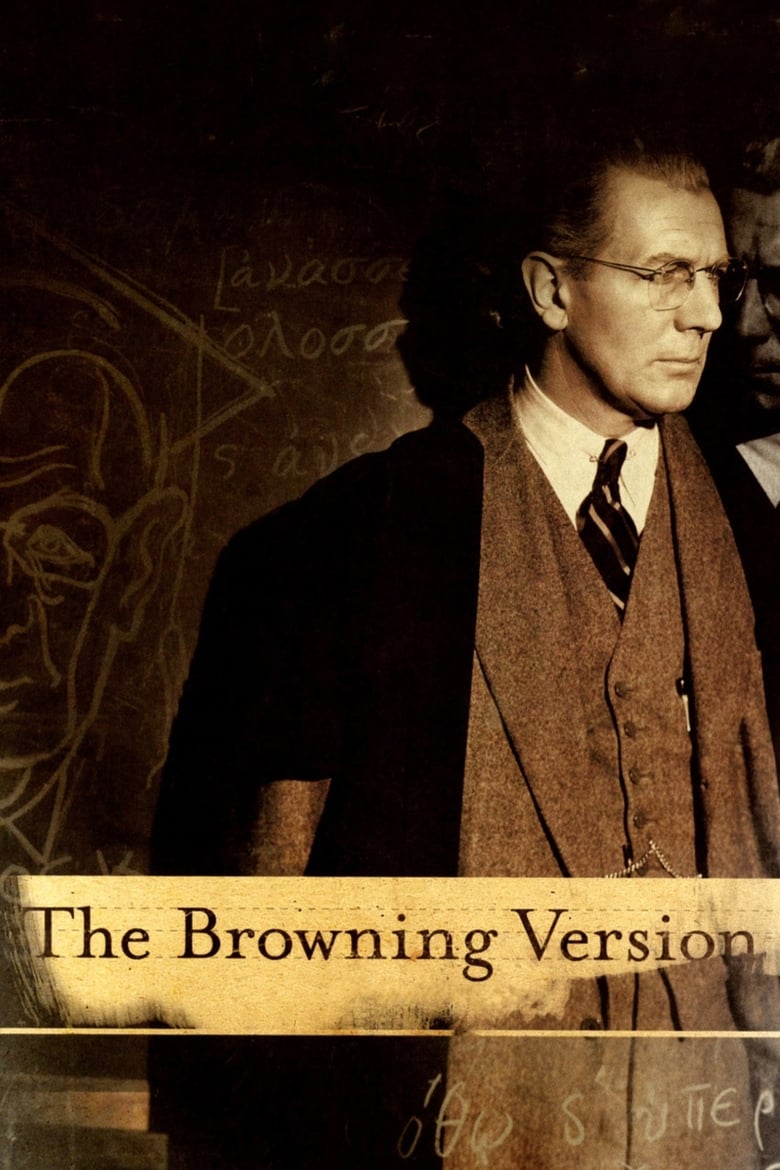
The Browning Version(Source)
The complete play takes us further into Crocker-Harris's life, beyond the classroom. We learn about his unhappy marriage to Millie, who is having an affair with Frank, the same teacher Taplow speaks to in the extract. Crocker-Harris is nearing the end of his career at the school and feels increasingly isolated and unappreciated. Taplow, however, offers him an unexpected gesture of kindness by giving him a copy of Robert Browning's translation of Aeschylus's Greek tragedy Agamemnon. This gift is significant because Crocker-Harris teaches Classics and has a deep interest in the subject. It also gives the play its title, The Browning Version.
As the play reaches its conclusion, Crocker-Harris begins to realise that he may have been wrong about how little his students think of him. Millie also reveals that she has arranged for Taplow to receive a better result than he expected, giving Crocker-Harris an opportunity to show a more generous side of himself. He eventually decides to give Taplow a better grade than the one he had originally planned. The ending does not neatly resolve Crocker-Harris's unhappy marriage or all the disappointments in his life, but it offers a small moment of emotional change and human connection. Through its characters, Rattigan explores loneliness, professional identity, marriage, disappointment, kindness, and the complicated relationship between teachers and students.
1. The Teacher-Student Dynamic
One thing I particularly like about The Browning Version is how realistically it explores the relationship between teachers and students. We often glorify teachers and imagine them as people who are always patient, understanding, and inspiring. But real teachers are human beings too. They have their own personalities, limitations, and ways of looking at the world.
Crocker-Harris is not the kind of teacher students look forward to meeting. He is strict, emotionally distant, and not particularly good at making his students feel comfortable. Taplow, for example, is clearly nervous about him. He has to attend an extra session even though it is the last day of the school term, and he spends a good amount of time talking about how difficult his teacher is.
Taplow is sixteen and is in the Lower Fifth. He has missed a day of school because he was ill, so Crocker-Harris has asked him to make up for it by doing extra work. The funny thing is that Taplow is waiting for him even though the teacher is late. Frank, another teacher, finds him waiting and starts talking to him.
But here is the interesting part. Crocker-Harris is not unintelligent or incapable of teaching. In fact, he seems to know his subject very well. The problem is that knowing a subject and knowing how to communicate it to students are two different things.
I think that distinction is important. A teacher can be knowledgeable and still struggle to connect with students. Being good at a subject does not automatically make someone good at teaching it.
2. Reading Plays in Class Was a Different Experience
Since I first read this play in NCERT Class 11, it also brings back memories of how we used to read dramas in school. We had this rather funny way of reading plays aloud. Everyone would take up a character and read their dialogues, almost like a role-play. In theory, it was supposed to make the play more interesting. In practice, we often ended up reading everything in the flattest, most uninterested, monotonous voice imaginable.
Imagine reading a dramatic scene where Caesar is dying and someone says, "Et tu, Brute?" It is supposed to be a moment of betrayal and shock. But the person reading it would say it in the same tone they might use to ask whether you had eaten lunch. Sometimes it almost sounded like, "Et tu, Brutus? How are your bruts? Have you had your food today?"
The tragedy would be happening on the page, but the person reading the dialogue would sound as if they were announcing the next period on the timetable. It was unintentionally hilarious.
The Browning Version was also one of those plays we read through dialogues and role-playing. And because the humour in this play is already so dry, that classroom reading style made it even funnier. Imagine someone reading Taplow's imitation of Crocker-Harris in a completely flat voice. The character is supposed to sound gentle and rather throaty, but the person reading it might sound as if they are reading out a grocery list.
Looking back, I think reading plays this way was actually a memorable experience. We might not have been the most talented actors, but we certainly found ways to make the scenes funny. And sometimes, a play becomes even more memorable because of the ridiculous little things that happen while reading it in class.
3. That One Line Every Teacher Seems to Have
Now, let us talk about one of my favourite moments in the play. Taplow is talking to Mr Frank about Crocker-Harris and starts imitating his teacher's rather gentle and formal way of speaking.
TAPLOW: (Mimicking a very gentle, rather throaty voice) "My dear Taplow, I have given you exactly what you deserve. No less; and certainly no more."
Do you know what makes this line so funny? It is so unnecessarily funny, even the first time you read it. The delivery is what makes it even better. Taplow is gossiping about his teacher to another teacher, and then suddenly remembers who he is talking to and wonders whether he has gone too far.
And honestly, I am pretty sure almost everyone has encountered a teacher who has said something similar in their own way. Maybe not these exact words, but the sentiment is familiar. You get exactly what you deserve. Not more, not less.
It is the kind of sentence that sounds perfectly reasonable when someone says it, but also makes you want to question every decision you have made in your academic life.
I can completely imagine this being printed on a Teacher's Day card for a particularly strict teacher. Although, if you are giving that card to Crocker-Harris, I would suggest being careful. You might end up standing outside the classroom for three days, rethinking every life choice that brought you there.
The humour is also interesting because it tells us something about Taplow. He clearly dislikes Crocker-Harris, but he is still anxious about speaking badly of him. He knows there are limits to what he should say, especially in front of another teacher.
4. The Joke Nobody Understood, Including Taplow
There is another moment in the play that I find absolutely hilarious. Taplow tells Frank about one of Crocker-Harris's classical jokes. Apparently, Crocker-Harris had made a joke in class, but nobody laughed. And the best part? Nobody had understood it. Taplow himself had not understood it either.
But Taplow knew that his teacher had intended it to be funny. So, out of ordinary common politeness, and perhaps because he felt a little sorry for him, Taplow laughed.
Now, imagine being in that situation. A teacher makes a joke, the entire class sits there in complete silence, and one student decides to laugh because he does not want the teacher to feel bad. That is already awkward enough. But Crocker-Harris notices him.
Instead of simply appreciating the laugh, Crocker-Harris tells Taplow that he is pleased with the progress he has made in Latin because he seems to have understood the joke when the rest of the class did not. He then asks Taplow to explain the joke to the other students so that they can share his pleasure.
Just imagine Taplow's situation. He did not understand the joke in the first place. He only laughed to be polite. And now he has somehow been assigned the responsibility of explaining it to the entire class!
I am pretty sure this kind of thing has happened to almost everyone at least once. You laugh at something because everyone else is laughing, or because you do not want to be rude, and suddenly someone asks you to explain what was so funny. And now you are stuck trying to invent an explanation for something you never understood.
What makes this scene even better is Taplow's imitation of Crocker-Harris while narrating the incident. He recreates that gentle, formal voice and the rather elaborate way his teacher tells him to explain the joke. The whole thing is funny because Crocker-Harris seems to take Taplow's polite laugh as proof of his academic progress.
I also think this scene tells us quite a lot about Crocker-Harris. He does not seem to recognise that Taplow was simply trying to be kind. Instead, he turns the situation into another opportunity to test him. And Taplow, who is already nervous around him, is left dealing with an awkward situation that he never intended to create.
5. The Crock, and Taplow Being Taplow
There is also the way Taplow refers to Crocker-Harris as "the Crock". He starts to use the name while talking to Frank, then quickly corrects himself and says Mr Crocker-Harris. I find that little detail very funny.
Students have always had a talent for coming up with strange names for teachers, especially the strict ones. Sometimes the name is based on the teacher's surname, sometimes on their personality, and sometimes it makes absolutely no sense to anyone outside that particular classroom. It is almost a school tradition.
And Taplow himself is an interesting character. He reminds me a little of Nobita from Doraemon. Not because they are exactly alike, but because there is something familiar about the feeling of watching someone who is trying so hard and still seems to get into trouble.
Taplow is waiting for his extra work, is worried about his results, and is clearly afraid of what Crocker-Harris might do if he disobeys him. Frank even suggests that he could leave and play golf while Crocker-Harris is late. Taplow is horrified at the suggestion. He cannot imagine simply walking away from the extra session.
The poor boy is trying to do what he is supposed to do, but his teacher gives him such a hard time that even waiting for him becomes stressful. It is a little like watching someone make an honest effort and still find themselves in one awkward situation after another.
But Taplow is not simply a student who dislikes his teacher. He admits that he rather likes Crocker-Harris despite everything. He even says that sometimes he thinks Crocker-Harris notices this and seems to shrivel up even more. That is such an unusual observation, and it adds another layer to their relationship.
Taplow is funny, nervous, occasionally careless with his words, and surprisingly observant. He makes fun of Crocker-Harris, but there is also a strange affection and respect in the way he talks about him.
6. Crocker-Harris Is Not Simply a Bad Person
When you first read the extract, Crocker-Harris can come across as an unnecessarily strict and unpleasant teacher. His students do not particularly like him, and even his interactions with them seem to lack warmth.
But I think it is important to look beyond the students' immediate opinions of him. The complete play gives us a more complicated picture.
There is a moment when Crocker-Harris talks with the new teacher and comments on the amount of control teachers have over their students. His response to the idea of having too much control is particularly interesting. He tells the new teacher not to do that, suggesting that he is aware that such power should not be used carelessly.
That moment gives us a little glimpse of self-awareness. He understands that the relationship between a teacher and a student should not simply be about authority and control. He knows that there is something uncomfortable about the way teachers can exercise power over students.
And that is what makes him interesting to me. He seems to understand certain things about teaching, but he has not necessarily made the effort to change his own approach.
I sometimes wonder what kind of teacher Crocker-Harris could have been if he had actually tried to connect with his students differently. He has the intelligence and the knowledge. Perhaps he could have been a much better teacher if he had been willing to reconsider the way he approached teaching.
But he does not seem particularly interested in doing that. And that is an important distinction. Understanding that something is not working and actually making an effort to change it are two very different things.
7. The Symbolism Behind the Title
Now, this is another part of the play that I absolutely love: the symbolism.
The title The Browning Version refers to Robert Browning's translation of the ancient Greek play Agamemnon by Aeschylus. The connection is not just a literary reference added to make the title sound interesting. It actually has a meaningful connection with the events and relationships in Rattigan's play.
In the play, Taplow gives a copy of Browning's translation of Agamemnon as a gift to Crocker-Harris. This is where the title comes from.
But the more interesting part is the connection between the Greek tragedy and the characters in Rattigan's play.
In Agamemnon, the central character is murdered by his wife, Clytemnestra, with the involvement of her lover, Aegisthus. The themes of betrayal, marriage, and the complicated relationships between people have their own echoes in The Browning Version.
Crocker-Harris's wife, Millie, is involved with Frank, the younger teacher. Their relationship creates an uncomfortable parallel with the betrayal in the Greek tragedy. Of course, nobody is actually murdered in Rattigan's play. But the literary connection makes the ordinary domestic situation feel much more layered.
I really like this kind of symbolism. A seemingly ordinary classroom story is connected to a Greek tragedy involving betrayal and murder. The characters are not literally repeating the events of the ancient play, but the similarities invite us to look at their relationships differently.
It also makes the title feel much more meaningful once you understand the reference. The Browning translation is not just a book that appears in the story. It becomes a literary connection through which we can understand some of the relationships in the play.
8. Greek Tragedy, Fate, and Human Choices
Another thing I find interesting is the contrast between the world of Greek tragedy and the rather ordinary world of The Browning Version.
Greek tragedies often deal with fate, prophecy, family conflicts, betrayal, and terrible consequences. You have a hero, a prophecy, and a series of events that can sometimes feel like one disaster after another. There is usually a much larger sense of fate hanging over the characters.
Ancient Greek audiences were familiar with the idea that fate could have an enormous influence on human lives. Prophecies and attempts to escape them often became central to the tragedy itself. The relationship between fate and free will is one of the things that makes these stories so fascinating.
And then you have The Browning Version, where the events are much more ordinary. There is no dramatic murder, no grand confrontation, and no spectacular tragic ending. The characters are simply dealing with their personal relationships and the consequences of their choices.
I actually like that contrast. It reminds us that betrayal, disappointment, and unhappy relationships do not always need a dramatic ending. Sometimes life is much quieter than literature makes it appear.
9. I Love That the Ending Is Unresolved
One of the things I appreciate about the play is that it does not neatly resolve everything.
Crocker-Harris and Millie do not have some grand dramatic separation in which every problem is discussed and every question is answered. Their relationship remains complicated. Millie is still serving him dinner, and the play does not give us a completely clear picture of what their future will look like.
Are they going to stay together? Are they going to separate eventually? We do not really get a definite answer.
And I like that.
Not every story needs to end with a clear resolution. Real people do not always make dramatic decisions at the end of a difficult day. Sometimes they continue living together, having dinner, and carrying on with their ordinary routines even when their relationships are far from perfect.
There is something realistic about leaving that uncertainty in place. The play does not force us to decide exactly what happens next. It simply allows the characters to remain where they are, with all their unresolved feelings and complications.
10. Why I Love The Browning Version
I think what makes The Browning Version special to me is that it manages to explore so many things without making everything unnecessarily dramatic.
It explores the teacher-student relationship, the difference between knowledge and teaching, the way students perceive their teachers, personal relationships, betrayal, and the complicated nature of human behaviour.
Crocker-Harris is not a perfect teacher, but he is also not a character we can simply dismiss as a villain. Taplow is funny, but his nervousness tells us something about the environment he is in. Millie and Frank's relationship adds another layer to the story, while the reference to Agamemnon gives the title a deeper meaning.
And then there is that wonderfully dry humour. Sometimes a single line or a small incident can make a character memorable. Taplow imitating Crocker-Harris, the joke nobody understood, and the way he carefully corrects himself after calling his teacher "the Crock" are all moments that make the play enjoyable.
It is also one of those plays that becomes more interesting when you think about the characters beyond what they say. There is humour in the dialogue, but there is also a lot of awkwardness, fear, affection, and disappointment underneath it.
It is one of those plays where the more you think about the characters and their relationships, the more interesting the story becomes.
💜 Final Thoughts
The Browning Version is a reminder that people are rarely as simple as our first impressions of them. A strict teacher might not necessarily be a bad person, a knowledgeable person might not necessarily be a good teacher, and an ordinary domestic situation can carry connections to some of the most famous tragedies in literature.
I love the way Terence Rattigan brings together humour, human relationships, and literary symbolism in such an understated way. It is not a story that needs a spectacular ending to leave an impression.
And honestly, if you have ever had a Crocker-Harris-like teacher, you probably understand why Taplow's imitation is so funny. Just remember to be careful about where you repeat it. You never know which teacher might be listening!
And if you read this play in school too, I hope you had a better dramatic reading experience than we did. Or perhaps the completely expressionless delivery was part of the fun.
Leave a comment 💬
Choose a message to share your thoughts about this article.
Your email app will open with your comment ready to send.