The Monk By Matthew Gregory Lewis
November 10, 2026
The Monk by Matthew Gregory Lewis is an absolute classic of Gothic literature. And when I say classic, I mean a novel that is genuinely difficult to read, not necessarily because of its language, but because of the things it explores. It deals with violence, corruption, sexual abuse, murder, religious hypocrisy, manipulation, and some extremely disturbing crimes. It is definitely not a comfortable read.
But what makes this novel particularly interesting to me is not simply the number of terrible things that happen throughout the story. It is the question behind all of them: how does someone become so corrupt?
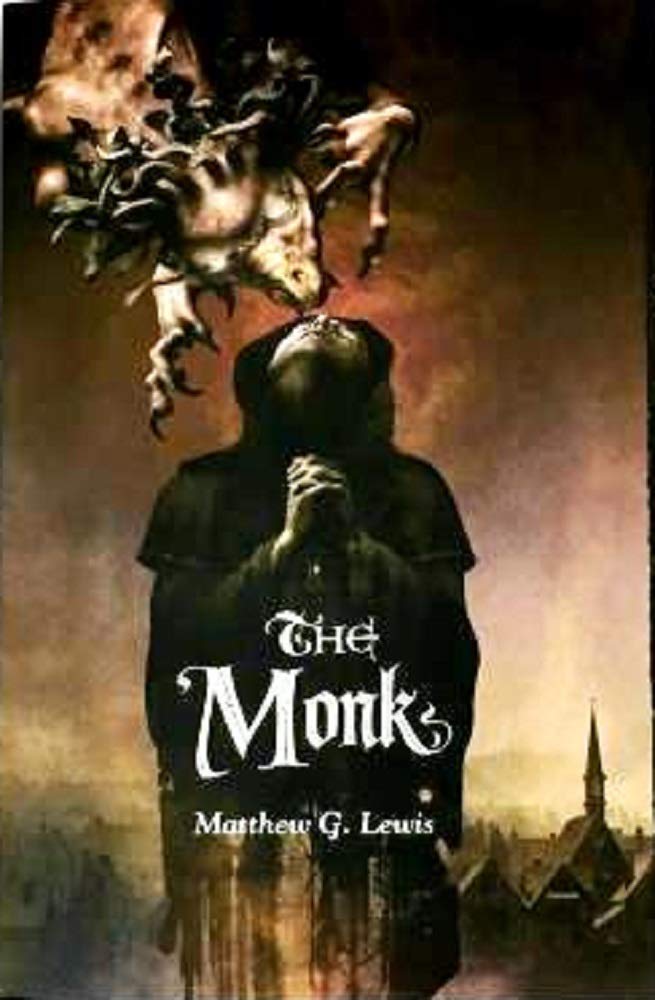
The Monk Cover Page(Source)
The central character, Ambrosio, is introduced as a highly respected monk. He was left at a monastery as an infant and grew up within the religious institution. Eventually, he became one of the most admired religious figures in Madrid. People travel from different places to listen to his sermons. He is considered an example of goodness, discipline, religious devotion, and moral excellence.
Everyone seems to believe that he is almost incapable of doing anything wrong. And that is precisely where things become interesting.
Ambrosio becomes so accustomed to being admired for his virtues that he gradually develops an enormous amount of pride in himself. He begins to believe in his own moral superiority. His goodness is no longer simply something he practises; it becomes something he takes pride in and expects others to recognise.
In fact, one of the most interesting aspects of the novel is that Ambrosio's downfall begins with a quality that everyone initially admires. His pride, his belief in his own perfection, and his inability to recognise his weaknesses make him particularly vulnerable to temptation.
As the story progresses, we watch him move from a respected religious figure to someone capable of committing increasingly horrifying crimes. And the transformation is what makes this novel so fascinating from a psychological perspective.
I also think the novel raises an important question about authority. How much trust should we place in someone simply because they occupy a respected position? And what happens when admiration becomes blind trust?
The most dangerous kind of corruption is sometimes the kind that begins with the belief that one is incapable of becoming corrupt.
A Quick Summary: What Is The Monk About?
The Monk by Matthew Gregory Lewis is a Gothic novel set in Madrid, Spain. It follows Ambrosio, a highly respected Capuchin monk whose reputation for religious devotion and moral excellence makes him one of the most admired figures in the city. However, beneath this public image is a man whose pride and suppressed desires gradually lead him towards moral corruption.
His downfall begins with his relationship with a young novice named Rosario, who is eventually revealed to be a woman named Matilda. She becomes closely involved with Ambrosio and encourages him to abandon the principles he has spent his life defending. What begins as a personal temptation gradually develops into a much darker series of events involving manipulation, sorcery, obsession, and violence.
Ambrosio eventually becomes obsessed with Antonia, a young and innocent woman. His desire to possess her leads him to commit increasingly terrible crimes, including murder and sexual violence. One of the most shocking revelations comes towards the end of the novel, when it is discovered that Antonia is actually his sister and Elvira, whom he murdered, was his mother.
Alongside Ambrosio's story, the novel follows several other characters, including Lorenzo, Agnes, Raymond, and the Prioress of the convent. Their experiences introduce additional themes of religious oppression, forbidden love, institutional cruelty, deception, and the abuse of authority.
Eventually, Ambrosio is arrested and condemned by the Inquisition. Terrified of his impending execution, he makes a bargain with Lucifer and sells his soul in exchange for freedom. However, the bargain does not save him. Lucifer reveals the full extent of his deception and leaves Ambrosio to die a horrifying death.
The novel is not simply about a religious man committing terrible crimes. It is about the gradual collapse of a person's moral identity, the dangers of unchecked pride, and the consequences of allowing power and desire to operate without restraint.
1. A Very Interesting Premise: How Does Someone Become So Corrupt?
The central character of the novel is Ambrosio. When we are introduced to him, he is already a highly respected religious figure. He has spent almost his entire life in a monastery and has developed a reputation for being exceptionally disciplined, intelligent, and devoted to his faith.
He was left at the monastery as an infant and was raised by the monks. As an adult, he becomes an influential preacher whose sermons attract enormous crowds. People admire him so much that they almost treat him as someone who is above ordinary human weaknesses.
But this is where I find the character particularly interesting. Ambrosio has become so accustomed to being admired that he starts believing in his own superiority. He does not simply want to be good; he wants to be recognised as exceptionally good.
There is a difference between practising goodness because you believe in it and becoming attached to the image of yourself as a good person. Ambrosio gradually confuses the two.
And this is important because his pride makes him vulnerable to the very things he believes himself to be immune to. He has spent so much time convincing himself that he is morally superior that he never seriously considers the possibility of his own downfall.
I think this is one of the most interesting psychological ideas in the novel. Sometimes, believing that you are incapable of doing something wrong can become more dangerous than recognising your own weaknesses.
2. Pride: The Beginning of Ambrosio's Downfall
This is probably one of the strongest aspects of the novel. Ambrosio's corruption does not begin with him being an obviously evil person. It begins with his pride.
He is constantly praised for his religious devotion, his sermons, his appearance, and his supposed moral excellence. Over time, he becomes increasingly attached to the admiration he receives from other people.
He starts seeing himself as someone who is different from ordinary human beings. He believes that his discipline and religious dedication have placed him beyond temptation.
And that is exactly what makes him vulnerable.
One of the most revealing moments comes when Lucifer eventually explains the reason Ambrosio was chosen for temptation:
"I saw that you were virtuous from vanity, not principle."
This is one of the most important lines in the entire novel. Lucifer is essentially explaining that Ambrosio's goodness was not as genuine as he believed it to be. His virtue was closely connected to his pride and his desire to see himself as superior to everyone else.
In other words, he was not necessarily good because he had developed a deep moral understanding. He was good because being good reinforced the image he had created of himself.
I find this particularly interesting because it changes how we understand his downfall. The novel suggests that his apparent perfection was already hiding a serious weakness.
And perhaps that is the most disturbing part. Ambrosio's greatest weakness is connected to the very quality for which everyone admires him.
3. Power, Authority, and the Corruption That Follows
Another thing I really like about this novel is how it explores the relationship between power and corruption.
Ambrosio is not simply a man with religious beliefs. He is also someone who occupies a position of considerable authority. People listen to him, trust him, respect him, and assume that his decisions are guided by morality.
But as the story progresses, we see how he begins using his position and reputation to protect himself. He wants to maintain the appearance of goodness even when his actions are becoming increasingly immoral.
This is where I think the novel becomes particularly relevant beyond its historical setting.
We often place enormous trust in people because of their positions. It could be a religious leader, a political figure, a teacher, an administrator, or anyone who occupies a position of authority. We sometimes assume that someone who has been given authority must also possess the moral qualities necessary to use it responsibly.
But authority and morality are not necessarily the same thing.
The problem begins when people stop questioning someone simply because that person has earned a respectable position. And when authority is not accompanied by accountability, it can become a tool for manipulation and abuse.
I would connect this with the famous observation:
"Power tends to corrupt, and absolute power corrupts absolutely."
This is a statement by Lord Acton, not a quotation from the novel, but I think it captures one of its central ideas beautifully.
Ambrosio's authority is not the only reason for his downfall, and it does not excuse his decisions. However, his respected position gives him opportunities to hide his actions, manipulate situations, and take advantage of the trust people place in him.
I think the important lesson here is that authority should always come with accountability. The moment someone becomes too powerful to be questioned is the moment that power becomes dangerous.
4. Matilda: Temptation, Manipulation, and Psychological Weakness
Matilda is one of the most important characters in the novel. Initially, she appears as a young novice named Rosario, who has developed a close relationship with Ambrosio. She is eventually revealed to be a woman who has disguised herself as a male novice to enter the monastery and remain close to him.
Matilda's relationship with Ambrosio is particularly interesting because she understands his personality and knows how much he values his reputation for virtue. She gradually becomes involved in his life and encourages him to give in to desires that he has spent years suppressing.
However, I would not say that Matilda is entirely responsible for Ambrosio's transformation. She certainly manipulates him and plays an important role in his downfall, but he repeatedly makes his own decisions.
This distinction matters. Ambrosio is tempted, but he is not simply an innocent person who has no control over his actions. As the novel progresses, he becomes increasingly willing to commit crimes to satisfy his desires.
Eventually, Matilda's connection to the supernatural becomes much clearer. Lucifer reveals that she was a demon sent to tempt Ambrosio because he had already recognised the weakness hidden beneath the monk's apparent virtue.
I find this particularly effective from a Gothic perspective. The supernatural element is not just there to create horror. It also represents the psychological vulnerabilities that Ambrosio refuses to acknowledge.
Matilda becomes the instrument through which those weaknesses are exposed.
5. Every Character Has a Story
Another thing I appreciate about The Monk is that it does not focus entirely on Ambrosio. There are several other characters whose experiences introduce different dimensions of the novel's themes.
Ambrosio is obviously the central character. His transformation from an admired religious figure into a criminal is the primary focus of the novel. His story explores pride, hypocrisy, temptation, obsession, and the consequences of unchecked desire.
Matilda, as discussed earlier, is the character who gradually brings Ambrosio's hidden weaknesses to the surface. Her identity as a demon is one of the important supernatural revelations of the story.
Antonia is another extremely important character. She is a young woman who becomes the object of Ambrosio's obsession. Her innocence and vulnerability stand in sharp contrast to his increasingly destructive behaviour. Her fate is among the most disturbing parts of the novel.
One of the most shocking revelations is that Antonia is actually Ambrosio's sister. Elvira, the woman he murders, is revealed to be his mother. This means that his crimes are even more horrifying than he initially understands. He has unknowingly destroyed his own family.
Elvira is Antonia's mother and Ambrosio's biological mother. She tries to protect her daughter and recognises that something is wrong with the monk's behaviour. Unfortunately, her attempt to expose him results in her murder.
Agnes de Medina has one of the most heartbreaking subplots in the novel. She is in love with Raymond and becomes pregnant. When her circumstances become known, the Prioress subjects her to horrific punishment and imprisonment. Through Agnes, Lewis explores the cruelty that can exist within religious institutions when authority is exercised without compassion.
Lorenzo de Medina, Agnes's brother, is an important character in the effort to uncover what has happened to her. He also falls in love with Antonia and tries to protect her. His character provides an important contrast to Ambrosio because he uses his position and influence to help others rather than exploit them.
Raymond de las Cisternas is Agnes's lover and the father of her child. His relationship with Agnes introduces another storyline involving love, separation, supernatural experiences, and the cruelty of the convent.
The Prioress is another important character because she represents the abuse of institutional and religious authority. Her treatment of Agnes shows that corruption is not limited to Ambrosio.
I particularly like that these characters are not all experiencing the same kind of suffering. Their stories reveal different forms of manipulation, oppression, violence, and the misuse of power.
6. Religious Hypocrisy and the Danger of Blind Trust
This is probably one of the themes I found most interesting while reading the novel. Ambrosio is trusted because people believe that his religious position makes him morally superior. They admire him so much that they rarely question the image he presents to the world.
And that is precisely the problem.
The novel repeatedly shows how easily people can confuse public reputation with actual character. Someone may appear extremely respectable in public while behaving in a completely different manner when nobody is watching.
Ambrosio's reputation becomes almost like a protective shield. People have so much faith in his goodness that the possibility of him committing terrible crimes seems unimaginable to them.
I find this particularly disturbing because it raises a question about how we evaluate people. Do we judge someone by their actual behaviour, or do we judge them by their position, reputation, and the image they have created?
The novel also explores religious hypocrisy through the Prioress. She is supposed to represent discipline and religious authority, yet she uses her position to inflict cruelty upon Agnes.
This makes an important distinction: the novel is not simply presenting one corrupt individual. It also examines how institutions can become dangerous when the people controlling them are not held accountable.
I think this is one of the reasons why the novel continues to be interesting. It reminds us that respect should never mean unquestioning obedience, and that no individual should become so powerful that their actions are beyond criticism.
7. A Psychological Study of How Someone Slowly Becomes Evil
One of the things I particularly enjoy about The Monk is that it can be read as a psychological study of moral deterioration.
At the beginning, Ambrosio is not presented as someone who is already committing terrible crimes. His transformation happens gradually. First, he becomes attracted to Matilda. Then he begins justifying his actions. Later, he becomes obsessed with Antonia, and eventually, he is willing to commit murder and sexual violence to satisfy his desires.
What I find particularly disturbing is how one decision leads to another. Once Ambrosio has crossed the boundaries he previously considered sacred, he does not simply return to his earlier way of thinking.
Instead, he increasingly finds ways to justify his behaviour. He becomes more concerned with avoiding punishment than with recognising the suffering he has caused.
This is an important distinction between guilt and genuine remorse. Feeling frightened about being discovered is not the same as understanding why your actions were wrong.
Ambrosio's psychological transformation is also connected to his pride. He has spent so much of his life believing that he is morally superior that admitting his own weaknesses becomes increasingly difficult.
I would describe this novel as a Gothic psychological horror story in many ways. The supernatural events are certainly important, but the most disturbing part is watching a human being gradually abandon his moral boundaries.
8. A Classic Gothic Novel: More Than Just Ghosts and Horror
Now, coming to the literary classification, The Monk is a classic example of a Gothic novel, more specifically a work of Gothic horror and Gothic romance. It is not a Gothic play, although Matthew Lewis also wrote plays during his career.
Gothic literature generally explores fear, mystery, supernatural events, dark settings, psychological instability, forbidden desires, and the hidden aspects of human nature.
And The Monk has almost everything you would associate with the darker Gothic tradition. We have monasteries, convents, underground passages, crypts, supernatural appearances, demons, sorcery, murder, imprisonment, and terrifying revelations.
The novel also contains elements of psychological horror and crime fiction. Ambrosio's actions are not frightening only because of the supernatural forces involved. They are frightening because of what he becomes capable of doing to other human beings.
Another interesting aspect is the use of multiple storylines. The novel moves between Ambrosio's downfall and the experiences of characters such as Agnes, Raymond, and Lorenzo. These stories introduce different forms of Gothic horror and eventually come together through the events surrounding the convent.
So, although it is absolutely a Gothic novel, I would say that its appeal goes beyond traditional supernatural horror. It is also a story about psychology, morality, religious institutions, and the darker possibilities of human behaviour.
9. Violence, Sexual Abuse, and the Uncomfortable Reality of the Novel
I should also mention that The Monk is a genuinely disturbing novel. It contains themes of rape, sexual exploitation, incest, murder, torture, religious oppression, and other forms of violence.
Some of the events are particularly difficult to read because the characters are placed in situations where they have very little control over what happens to them.
The experiences of Antonia and Agnes are especially important here. Their stories show how vulnerable people can become when someone else has the power to control their circumstances.
What makes these events even more disturbing is that some of the people who commit or enable the violence are individuals who are supposed to represent morality and religious discipline.
I think this is an important part of the novel's criticism of hypocrisy. It shows the difference between appearing morally respectable and actually behaving in a moral manner.
The novel is not necessarily an easy recommendation for everyone. Its subject matter is extremely dark, and some scenes can be emotionally difficult. But if you are interested in Gothic fiction and psychological explorations of morality, it is certainly a significant work to read.
10. The Ending: Lucifer, the Final Revelation, and Ambrosio's Downfall
And now we come to the ending. Honestly, this is one of the most shocking parts of the novel because so many things come together at this point.
After committing numerous crimes, Ambrosio is finally arrested and brought before the Inquisition. He is accused of his crimes and condemned to be executed. Matilda also faces punishment for her involvement in the events.
However, Ambrosio is terrified of dying. Matilda manages to enter his prison cell and tells him that she has escaped her own punishment by selling her soul to Lucifer. She encourages him to do the same.
Eventually, Ambrosio agrees. He chooses to surrender his soul in exchange for freedom, believing that he can escape the consequences of his actions.
But Lucifer reveals several horrifying truths. Matilda was actually a demon sent to tempt him. Elvira, whom Ambrosio murdered, was his biological mother. And Antonia, whom he violated and killed, was his own sister.
Think about the implications of that revelation. Ambrosio has destroyed his own family without even knowing the truth about his identity.
There is also an interesting aspect to the final moments. Ambrosio is so frightened of his impending execution that he chooses to surrender his soul rather than face what is coming. The guards are approaching to take him to his punishment, but he does not wait for what might happen next.
I would not say that the guards were necessarily coming to rescue him. They were coming in connection with his execution. But the timing creates a particularly tragic irony: Ambrosio makes his final bargain because he cannot bear the thought of facing the consequences of his crimes.
Lucifer eventually carries him into the air and drops him onto the rocks. Ambrosio does not die immediately. He suffers terribly before his death.
And that is the end of someone who once believed himself to be almost incapable of sin.
I think the ending is particularly effective because Ambrosio's final decision reflects the same weakness that has followed him throughout the novel. Even at the very end, he is more concerned with escaping punishment than with accepting responsibility.
11. The Importance of Accountability: Authority Should Never Be Above Questioning
One of the biggest things I took away from this novel is the importance of accountability.
Think about how much trust people place in Ambrosio. He commits several horrifying crimes, yet his reputation initially makes it difficult for people to imagine that he could be responsible for them.
And this is what I find particularly interesting. The problem is not simply that people trust someone. Trust is important in any relationship or institution. The problem begins when that trust becomes blind.
When someone has authority, their actions should be examined even more carefully, not less. A respected position should come with greater responsibility.
This applies to religious authority, political authority, administrative authority, and almost every other form of institutional power.
Authority without accountability can become extremely dangerous because it allows people to use their positions for personal interests while maintaining an appearance of respectability.
I also think the novel makes an interesting point about the difference between being admired and being genuinely good. A person's reputation cannot be treated as proof of their character.
And perhaps that is one of the most relevant lessons of The Monk. We should never allow someone's position, popularity, or reputation to make us stop questioning their actions.
Respect and accountability should exist together. The moment one replaces the other, authority can become a means of exploitation.
💜 Final Thoughts
The Monk is certainly one of the more disturbing Gothic novels I have come across. It has a very interesting premise, several memorable characters, and a storyline that becomes increasingly dark as you move towards the ending.
What I particularly like about this novel is that it gives you so many things to think about beyond the crimes themselves. Ambrosio's transformation raises questions about pride, morality, temptation, religious hypocrisy, and the relationship between power and responsibility.
I also find the psychological aspect particularly interesting. Ambrosio does not begin as someone who is openly evil. He begins as someone who believes that he is exceptionally good. And perhaps that is what makes his transformation so disturbing.
The novel also makes you think about how easily people can become attached to someone's public image. We often assume that a person who has earned admiration and authority must also be deserving of unquestioning trust. But The Monk shows why that assumption can be dangerous.
I would definitely recommend this novel to anyone interested in Gothic literature, psychological horror, and stories that explore the darker aspects of human behaviour. However, I would also mention that it contains extremely disturbing themes, including sexual violence, incest, murder, torture, and religious oppression.
It is not a particularly comfortable read, and it is perfectly understandable if some of its content is too disturbing for certain readers.
But if you are interested in understanding how a character's pride, desires, and inability to recognise his own weaknesses can eventually lead to his complete moral destruction, The Monk is certainly worth exploring.
If you are interested in understanding the plot, characters, themes, ending, and interpretations without reading the entire book, there are detailed summaries available online. You can explore these resources.
I have included two useful links below:
For me, one of the most interesting things about this novel is that it reminds us that being considered a good person and actually being one are two very different things.
The moment authority becomes unquestionable, accountability begins to disappear. And without accountability, even the most respected institutions can become dangerous.
Thank you for reading! 💜
Keep reading, keep questioning, and keep discovering the stories that help us understand the complicated sides of human nature.
Leave a comment 💬
Choose a message to share your thoughts about this article.
Your email app will open with your comment ready to send.